
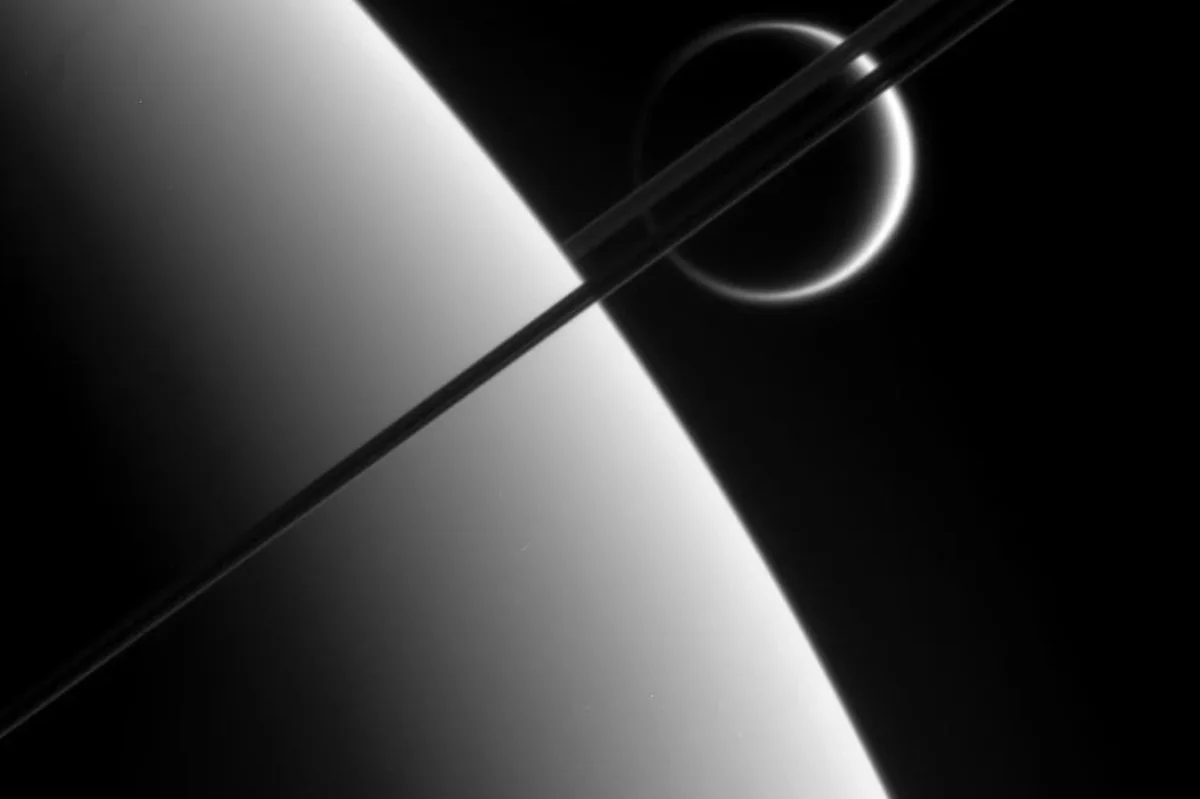

New research suggests that Saturn’s impressive ring system and its largest moon, Titan, may have resulted from an ancient collision. The study, recently accepted by the Planetary Science Journal, explores the hypothesis that Titan originated from a collision between two moons, which could explain the relatively young age of Saturn's rings, estimated to have formed around 100 million years ago.
Led by researchers from the SETI Institute, the team utilized computer simulations to investigate the dynamics of Saturn’s moons and their orbits. These simulations indicated that a collision involving an additional moon might have been plausible, leading to the formation of the rings we see today. The findings challenge longstanding beliefs about Saturn's moon system and the characteristics of its rings.
Notable observations from NASA’s Cassini mission revealed inconsistencies in the orbits of Saturn's moons and the unexpected youthfulness of its rings. These discrepancies prompted astronomers to reconsider the planet's evolutionary history. The research highlights Hyperion, the smallest major moon, as a key clue in piecing together the past of Saturn's extensive moon system.